Author: Molly Murn
Genre: Literary Fiction
Length of novel: 80,000 words
This is a braided novel with three separate but interwoven storylines that converge at the climax of the book. Each line has its own story building elements:
Inciting incident:
1st strand: Fifteen-year-old, pregnant Nell is sent away from Kangaroo Island to give birth. Her child was conceived following a love affair with Indigenous Islander, Sol.
2nd strand: European sealers abduct a group of Ngarrindjeri sisters from their people
3rd strand: The death of Pearl’s grandmother Nell brings her and her family to Kangaroo Island
Progressive Complications:
1st strand:
- Nell is forced to have her child adopted
- Nell’s parents forbid further contact between Nell and Sol
2nd strand:
- Anderson’s son William develops a closeness with Maringani, a child abducted along with her mother
- Anderson and William’s relationship is increasingly hostile
- Anderson fathers a child with Emue, an abducted Ngarrindjeri woman
- Physical and sexual violence escalates at the camp
3rd strand:
- Pearl struggles with her fertility issues
- Pearl’s younger sister is newly pregnant
- Pearl discovers an old photograph of a man named Solomon
- The family argue about the division of Nell’s estate
Turning Point:
1st strand: Nell sees her former lover for the first time and concludes that he has discarded her
2nd strand: Anderson attacks Emue and almost kills her
3rd strand: Pearl learns that her family have kept her sister’s pregnancy secret from her and the disconnect between family members widens in their shared grief
Crisis:
1st strand: Will Nell confront Sol?
2nd strand: Will William defy his father and help protect the Ngarrindjeri sisters?
3rd strand: Will Diana sell Nell’s house against the family’s wishes?
Climax:
1st strand: Nell is angry with Sol and demands to know why he did not help her or write to her but leaves without a response
2nd strand: William runs away with the Ngarrindjeri sisters
3rd strand: Diana keeps the house and its history. Through letters and art she discovers the truth about Nell’s first child.
Resolution:
1st strand: Nell writes the history of Kangaroo Island and her own history in the hope that her granddaughter Pearl will read and understand her story
2nd strand: William and Maringani have a child together. They learn that Anderson died and that they are safe.
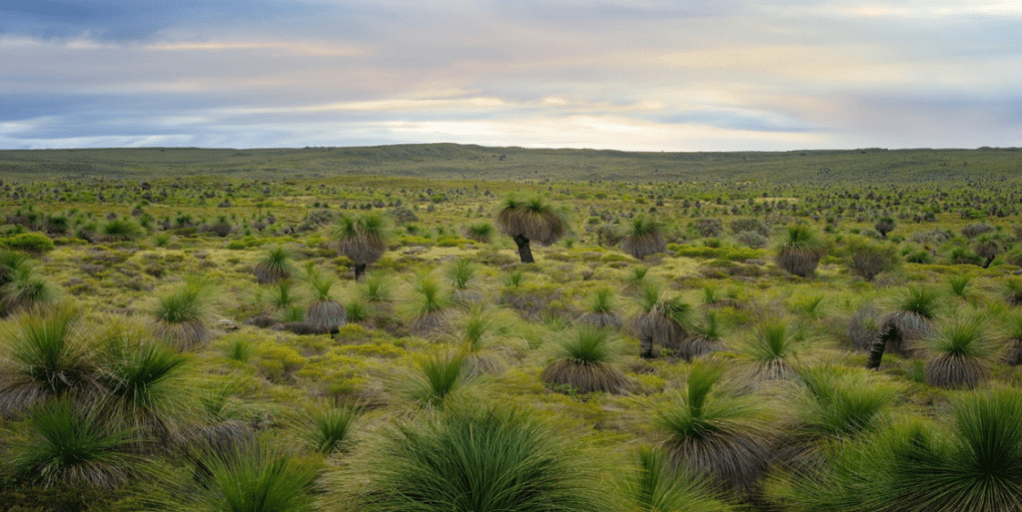
3rd strand: Diana meets her brother for the first time and discovers letters that Solomon wrote to Nell which were hidden by her parents. Pearl discovers that she is pregnant. She reads Nell’s story. She finds the grass tree that Nell and Sol used to meet underneath and sets it alight, to release the story, and hope for regeneration.
Perspective: This story is told from different perspectives throughout the novel. Nell is the only character to have first-person status and this is mostly written in the past tense (I was/he knew/she watched) as Nell writes the story of her lost love and how her grief shaped her as a mother and grandmother. Other scenes are told through the third person perspective and in the past tense unless the action unfolds in present day, when the present tense is used.
Narrative Voice: Murn writes from either first person or close third perspective. There are as many as eleven characters who tell parts of the story in their own narrative voice. In addition, there are three separate, connected strands to this story spanning three timelines.
Telling a story using multiple narrative voices is not an easy trick; it can be confusing for the reader and it inhibits their attachment to character. It can also make your story feel rushed as you have limited time to devote to each perspective. The benefits are that it keeps the narrative fresh and alive, done well, each character should be distinct from every other and this can prevent your story sagging. If you want to write a novel using multiple perspectives with strong braiding elements, consider studying novels such as The Godfather by Mario Puzo, Pillars of the Earth by Ken Follett, or Magician by Raymond E. Feist to explore this technique further.
Themes: This is a story with many interwoven threads. It explores female relationships and how secrets and hidden pain can damage and shape connections between women. It presents a nuanced view of the relationships between European sealers and the women they brought to Kangaroo Island. This is also a story about grief; grief for what is, or what was, or what has never been allowed.
Characterisation: Murn uses dialect to good effect as part of her characterisation process. This lends an authenticity to the work and places the characters in their historical setting. Many of the characters are multilayered and compelling and in all cases their motivations and conflicts are well considered. In particular, Murn draws the characters of Nell and Anderson in a way that is powerful, yet they are written with an exquisite lightness of touch. For the character of Anderson, Murn hints at his backstory and the reader understands what drives him to brutalise Emue, Maringani and William, without this being explicit. Nell’s love for Solomon and her heartbreak at the loss of her child is beautifully, painfully drawn. This novel is a study on grief and inherited loss and nowhere is it written more beautifully than when Murn writes from Nell’s perspective. Some of the final scenes are written in an epistolary style and here we have Solomon’s voice. We feel and understand the depth of his ill-fated love for Nell.
Kangaroo Island is a rich vein that runs so fiercely through this work that feels like a character in its own right. One that soothes and nourishes, one that screams and hides and exposes its secret shame.
Style: This book is written in an extraordinary poetic and lyrical style. At times the prose feels like a song that lingers long in the memory. Murn is excellent at showing life and joy and sorrow without telling the reader what to feel. Her strength is in the quality of her prose and the beauty of her words. She uses a number of literary devices to good effect; repetition, extended metaphor, motif and imagery are all exceptionally strong in this novel. This is a wonderful novel to spark inspiration. Open the book at almost any page and you will smell the sea around Kangaroo Island, taste the honey, or feel the mud between your toes cracking under the sun. There is a fragmentary quality to this story and it is in fragments that Diana and Pearl learn the truth about Nell and about the history of Kangaroo Island.
Writing exercise: Focus on an event from your past – one that lingers in your mind. Write a paragraph about your experience, what it was, what it meant for you, and the personal feelings it stirred at the time.
Next write a paragraph about another person’s – entirely different – experience following the same event. This can be a character you create or a person you know.
Find an experience from the present or imagine an experience from the future that may seem unrelated to the one from your past. Write a paragraph about this.
Blend these three paragraphs into a cohesive whole – perhaps a scene or a short story. Draw out your themes. Keep the threads evenly weighted and allow the outside voice to work alongside your voice from the past and the present/future. Find links between these three voices and events.
By Lara Saunders
[purchase Heart of the Grass Tree through Matilda Bookshops, Stirling, South Australia]
 Mockingbird Writers