“When you reread a classic, you do not see more in the book than you did before; you see more in you than there was before.”
Cliff Fadiman, American author
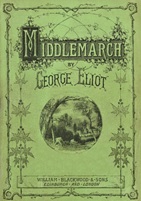
Recently a well-read friend surprised me by saying how boring she found George Eliot’s Middlemarch.
‘I decided to re-read Middlemarch,’ she explained to me. ‘It was my all-time favourite classic when I was a teenager. Now I am only halfway through and finding it tedious in the extreme; boring, long-winded and uninteresting.’ She wondered what had happened to her taste in books over the years. ‘I have so little time for reading these days as work is all-consuming. If I have a week’s holiday, I ask the librarian to recommend well-written books that are mainly short and not too intellectual.’
What does that leave her with?
Certainly, nothing like the lengthy (174,000 words) and difficult Catch 22 by Joseph Heller, or Earthly Powers by Anthony Burgess which at 327,000 words is a massive read even by 19th century standards! When did we have time to read these books while working, studying and/or parenting? How on earth did we get through Great Expectations, Jane Eyre, or Doctor Zhivago? I loved those larger-than-life classics. When I left home, I even looked for the biggest classic I could find to display on my new bookshelf. This turned out to be Tolstoy’s War and Peace at 581,000 words and there it remains to this day, completely untouched. How pretentious can you get?
Today we avidly read all the prize winners and whine how standards have dropped since we were reading them in 70s and 80s. How can we even begin to compare 2020 Booker winner, Shuggie Bain to Rushdie’s magnificent 1981winning oeuvre, Midnight Children? We ask each other at our monthly book club meetings, sipping Pinot Grigio and nibbling camembert wedges. But when someone suggests we re-read Midnight Children, we complain we are too busy, that the novel is too long, too complex for a monthly read. It needs to be read at our leisure over the year and discussed after the holidays in December. And of course we never do….
So how can younger readers approach the classics? How can they call themselves well-read if they baulk at reading more than 120,000 words or complex structure or language? When I worked as a library assistant in a high school in the early 2000, students would approach me every day and ask if they should read any of the classics. I would recommend Wuthering Heights and the poor students could not even get past the first few pages. So I ended up giving them a list of novellas written by classic authors, which students could more easily read. If they loved one, they could then move on to its heftier cousin.
Here is my list, which includes 19th and 20th century authors of note.
Thomas Hardy : Under the Greenwood Tree
Tolstoy : Family Happiness
Charlotte Bronte : Villette
Charles Dickens : A Christmas Carol
Jane Austen : Lady Susan
Fyodor Dostoyevsky: Notes from Underground
James Joyce: A Portrait of the Artist as a Young Man
DH Lawrence : The Fox
Virginia Woolf: Between the Acts
George Eliot : Silas Marner
Anthony Burgess : A Clockwork Orange
George Orwell : Animal Farm
Ernest Hemingway : The Old Man and the Sea
Salman Rushdie : Shame
John Steinbeck : Of Mice and Men
Doris Lessing: The Fifth Child
Of course if all else fails, there is always the beautifully crafted To Kill a Mockingbird, Harper Lee’s one and only published book (apart from Go Set a Watchman, a draft novel, controversially published in 2015). This is the quintessential novel for aspiring authors and readers alike. Touted as the perfect novel, it was published in 1960 and instantly successful for the first-time author. It’s a modernist, minimalist but also suspenseful, character-rich, and inspiring novel. While there is no novella by Harper Lee to whet the reader’s appetite, he or she should pick up the approximately 100,000-word novel, and just dive in and enjoy!
 Mockingbird Writers